
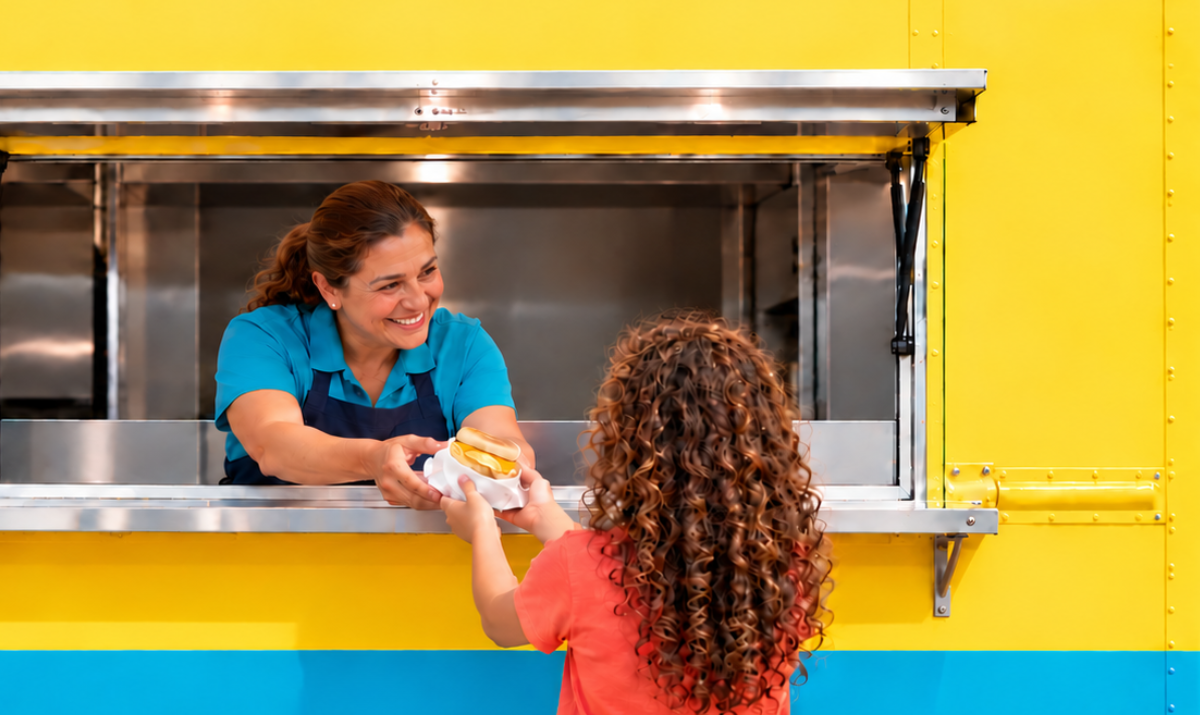
Food trucks for schools help you feed kids where they want to be around campus. That’s especially true early and late in the school year when indoor cafeteria spaces sit empty. Throughout the rest of the year, rolling food service can turn an ordinary lunch period into something special that students look forward to. While this idea has long existed in the restaurant industry, it’s still taking hold in K-12 food service.
Food trucks are also just one option in a bigger shift happening in school nutrition: meeting kids where they are. That means boosting average daily participation when school’s in session, and it can even help you feed more kids during the summer months. Below is a closer look at how a school food truck works, followed by five other creative serving models to consider.
Funding food trucks for schools with grants
Grant dollars can be the best way for district’s to make a food truck purchase. Equipment grants, for example, can give schools the chance to invest in new ways to feed students beyond the cafeteria. The best part? It’s an investment that helps boost participation, raising program revenue while nourishing more kids.
Running school food trucks all year
A truck that does double-duty as a summer meal site and a school-year novelty gives nutrition directors one mobile answer to two different problems. You might serve a unique menu item, like tacos, a stir-fry, a fresh salad, or a protein box to build excitement. Some districts pair a truck’s debut with a family meal event, inviting the entire school community to eat together. It’s a great way to secure community buy-in and even make families your strongest allies in encouraging students to try the food truck. A growing number of districts go with small, all-electric food trucks, since they run quieter, produce no emissions in a drop-off zone full of kids, and typically cost less to operate over time. They’re also more practical for serving meals around campus, including on grass fields and in courtyards.
5 Other Ways to Feed More Kids in More Places
Here are five more serving models districts are using to reach more kids:
1. Breakfast in the Classroom
Moving breakfast into the first minutes of the school day, instead of a rushed line before the bell, is one of the strongest participation drivers in school nutrition. Every student is already in the room, so there’s no separate trip . The tradeoff has always been the paperwork that comes with it: a roster to mark, allergy notes to remember, and a headcount to reconcile by hand at the end of the day. A digital classroom roster puts that information in a teacher’s hands in real time, allergy alerts included, so the logistics don’t outweigh the benefit.
2. Grab-and-Go Carts in High-Traffic Areas
Picture a cart stationed right where bus riders spill through the doors each morning. Mobile carts placed at entrances, bus drop-off zones, or busy hallway intersections let students grab a meal on their way to first period without ever detouring to the cafeteria. That means more students starting the day fresh with a nutritous morning snack.
3. Coffee Bars and Carts
Many high schoolers already treat coffee shops as a normal stop before class. More school districts are bringing that popular ritual onto campus. A campus coffee bar, stocked with beverages that fit Smart Snacks limits makes your nutrition program irresistible. Districts running coffee bars report strong a la carte revenue and a bump in participation. Some districts staff the cart with a student leadership or hospitality class, turning it into a hands-on learning opportunity as well as a revenue stream.
4. Family and Community Meal Events
An outdoor lunch event that invites families to eat alongside students turns a routine meal service into a community moment. Districts that have hosted these events report strong turnout and requests to make it a regular occurrence. It’s also a natural showcase for a food truck, new grab-and-go carts, or exciting new menu items.
5. Afterschool Meals for Student Athletes
Afterschool meal programs can serve student athletes as part of a broader enrichment program, as long as other activities like tutoring or study hall are also available to students. Practice fields, gyms, and locker rooms are all fair game for meal service, whether that means a table set up courtside or meals delivered to each team where they practice.
More Places to Eat Means More Kids Fed
Every one of these ideas, food trucks included, solves the same problem from a different angle. For many districts, the tradeoff has always been the logistics that come with serving somewhere other than the cafeteria: rosters, allergy tracking, and counts that have to reconcile back to the kitchen at the end of the day.
LINQ’s digital rosters and tablet-based POS features bring fast student lookup, real-time allergy alerts, and automatic data syncing to anywhere you’re serving. The whole system syncs in real time, and it keeps running transactions and storing the data if the network goes down. That way your records stay accurate and your program audit-ready whether a meal was served in a classroom, off a cart, or from a food truck.
Dive Deeper Into Flexible Serving
Watch this on-demand webinar for proven ways to serve more students in more places, all year long.